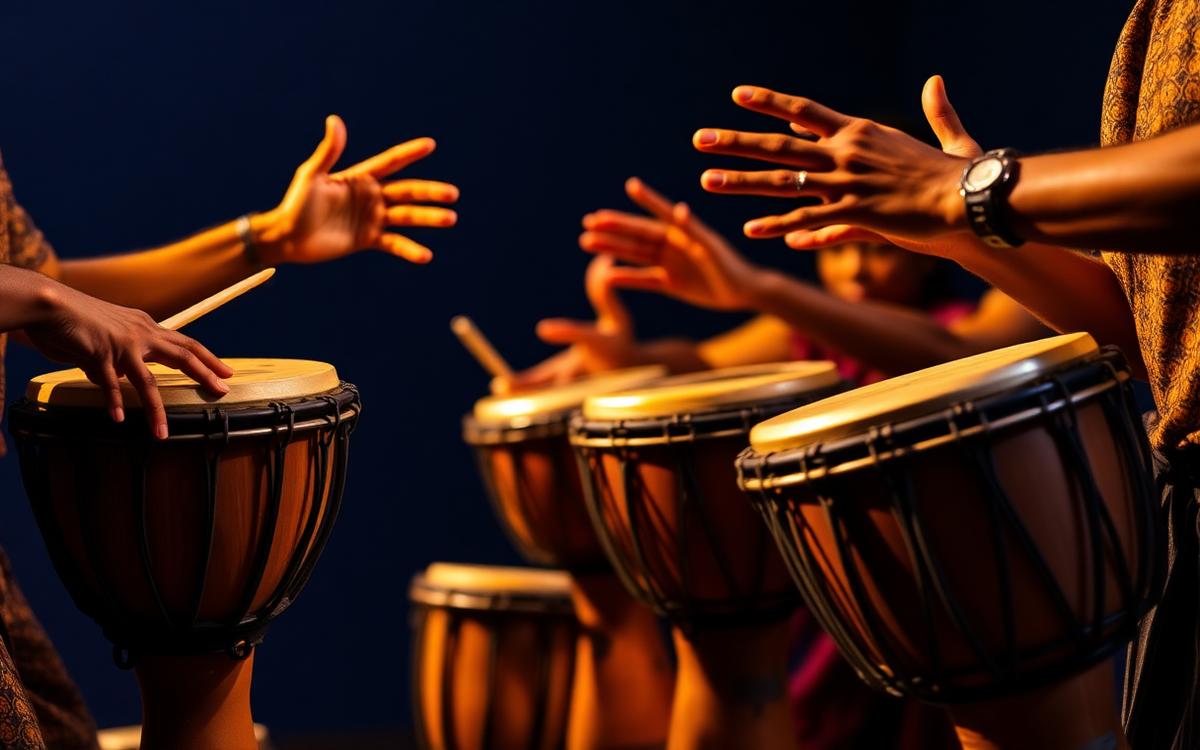
A hands-on music track exploring the drum traditions of West, Central and East Africa and their living connections to Afro-Brazilian rhythms. Participants study technique, ensemble leadership and the cultural contexts that make percussion a language of community and ceremony.
What you will learn
- Djembe, dundun, talking drum and regional percussion techniques
- African rhythmic systems, polyrhythms and time signatures
- Ensemble playing, solo phrasing and call-and-response
- The drum in ritual, ceremony, storytelling and social commentary
- Afro-Brazilian rhythmic connections: samba, ijexá, afoxé and maracatu
Curriculum
Six-week intensive · 200 contact hours · 6 structured modules
- History and social role of the drum in African societies
- Drum families: djembe, dundun, talking drum, bougarabou
- Tuning, posture and hand technique
Practical assignments
- Master three traditional rhythms with variations and breaks
- Lead an ensemble through a structured arrangement
- Record a solo and ensemble demonstration piece
Learning outcomes
- Play multiple African percussion instruments with correct technique
- Understand and teach polyrhythmic structures
- Connect African and Afro-Brazilian percussion practices in performance
Who it is for
Drummers, percussionists, musicians, music educators and cultural researchers committed to African musical traditions.
Certification outcome
A final ensemble performance and a recorded demonstration of traditional and Afro-Brazilian rhythms.
Verified training sources
This track is mapped to named regulatory bodies, universities, peer-reviewed research and industry training pathways.
View the verification framework →Apply for this track
Applications for IOP 2026 are open to professionals across Africa and to Africans residing in Brazil.
Apply Now